
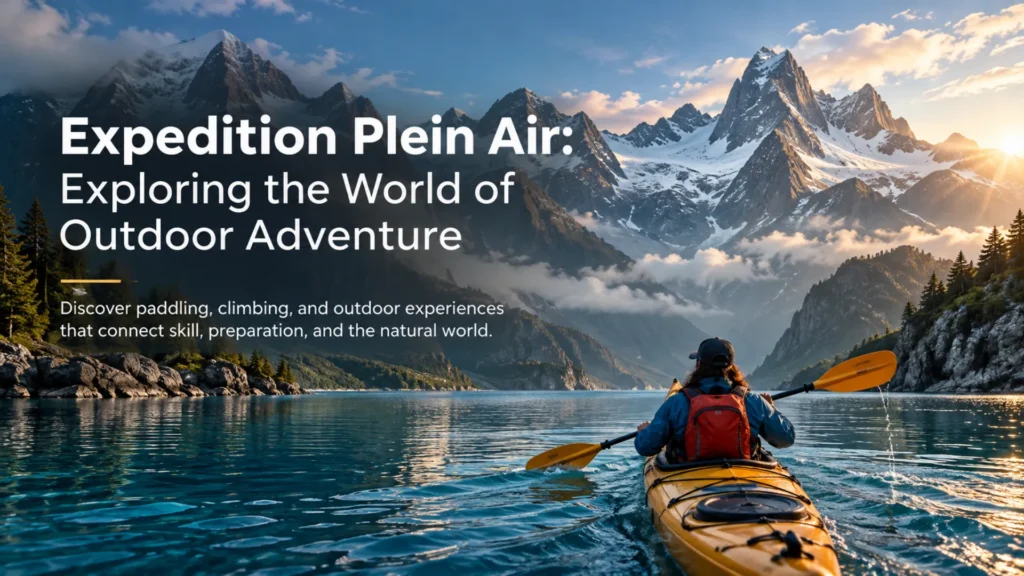
Expedition Plein Air: Exploring the World of Outdoor Adventure
Outdoor adventure brings people into direct contact with natural environments through activities that require movement, observation, preparation, and practical skills. Canoeing, kayaking, rock climbing, and ice climbing are examples of pursuits that combine physical activity with an understanding of changing outdoor conditions. Each activity presents a different relationship with the landscape, from navigating rivers and lakes to moving across rock formations and frozen surfaces. Expédition Plein Air is associated with these forms of outdoor recreation through its historical website, which featured paddling, climbing, equipment, and guided experiences. The original presentation emphasized adventure in natural settings and introduced visitors to several ways of exploring the outdoors. These subjects remain relevant to understanding recreational opportunities, technical skills, and responsible participation in outdoor activities.
The experience of spending time outdoors extends beyond reaching a destination or completing a particular route. Paddlers must understand how water behaves, climbers must evaluate terrain and equipment, and participants in multi-activity outings must adapt to different environments. Weather, temperature, physical ability, and the characteristics of a location can all influence the difficulty of an outdoor experience. Preparation is especially important because conditions on rivers, lakes, cliffs, and frozen surfaces can change between visits. Learning basic techniques and recognizing environmental hazards can help people make better decisions before and during an activity. The broader purpose of outdoor education is to develop the knowledge and judgment needed to explore natural spaces with greater awareness.
Contents
Canoeing and Kayaking in Natural Water Environments
Canoeing and kayaking are established forms of water-based recreation practiced on lakes, rivers, and other suitable waterways. Although both activities involve human-powered boats, their equipment and paddling techniques are different. Canoes are commonly propelled with single-bladed paddles, while kayaks are generally associated with double-bladed paddles and a seated paddling position. Boat designs vary considerably according to their intended use, including recreational touring, whitewater paddling, and travel over longer distances. Calm-water paddling often emphasizes navigation and efficient movement, whereas whitewater requires additional skills for reading currents, controlling the boat, and responding to obstacles. River difficulty is commonly described using the International Scale of River Difficulty, which ranges from Class I to Class VI. This classification provides a general indication of technical difficulty, but actual conditions also depend on water level, flow, obstacles, and local hazards. Appropriate personal flotation devices, suitable clothing, route planning, and awareness of weather conditions are important considerations for any paddling trip. Training and gradual skill development help participants understand both the possibilities and limitations of water-based exploration.
Understanding Rock Climbing and Ice Climbing
Climbing activities involve movement over steep or vertical terrain using a combination of physical technique, equipment, and careful decision-making. Rock climbing takes place on natural rock formations or artificial climbing structures, with different disciplines requiring different forms of protection and movement. Outdoor rock climbing may involve ropes, harnesses, helmets, anchors, and other specialized equipment depending on the route and climbing style. Climbers must also assess rock quality, route difficulty, weather conditions, and the reliability of their protection systems. Ice climbing introduces another set of challenges because participants move across frozen waterfalls, ice formations, or other suitable icy terrain. Ice tools and crampons are commonly used to support movement, while ropes and protection systems help manage certain climbing risks. Unlike stable indoor climbing surfaces, natural ice can change in response to temperature, sunlight, water flow, and freeze-thaw cycles. These environmental variables make training, appropriate equipment, and experience particularly important. Rock and ice climbing therefore share a foundation in technical skill while demanding different methods of movement and hazard assessment.
Outdoor Preparation, Equipment, and Practical Skills
Successful outdoor planning begins with an understanding of the intended activity and the environment in which it will take place. A short paddle on sheltered water requires different preparations from a whitewater route, just as a recreational climbing session differs from a technical ice climb. Participants should consider their physical condition, previous experience, expected weather, terrain difficulty, and access to assistance. Equipment must be selected for its intended purpose rather than solely for its appearance or convenience. Safety-related items such as flotation devices, helmets, harnesses, and protective clothing should be appropriate to the activity and correctly fitted. Outdoor preparation also includes learning how to use equipment and recognizing situations in which a plan should be modified or abandoned. Maps, weather information, route descriptions, and local regulations can provide useful details before departure. In environments where technical knowledge is essential, instruction from qualified professionals can provide structured opportunities to develop skills. Preparation does not remove every outdoor risk, but it can reduce preventable mistakes and improve decision-making when conditions become challenging.
Kayaking Courses and Essential Paddling Techniques
Kayaking instruction provides a structured introduction to boat handling, paddling techniques, and water awareness. Beginners commonly start by learning how to enter and exit a kayak, maintain a stable position, and coordinate forward and turning strokes. Additional skills can include stopping, moving sideways, maintaining balance, and responding appropriately when a kayak capsizes. The techniques taught depend on the type of kayaking, the experience of the participants, and the characteristics of the training environment. Whitewater instruction may introduce current recognition, eddy turns, ferrying techniques, and supervised rescue procedures. Training on calm water can help develop boat control before participants progress to more demanding conditions. Understanding the relationship between paddle movement, body position, and boat response is useful across many forms of kayaking. Regular practice under suitable supervision can help participants build confidence while developing a realistic understanding of their abilities.
Outdoor Equipment Selection, Rental, and Maintenance
Outdoor equipment is designed for specific environments, loads, and patterns of use, making appropriate selection an important part of activity planning. Kayaks differ in length, stability, hull shape, and intended water conditions, while climbing equipment is manufactured for particular functions and technical requirements. Rental equipment can provide access to specialized items without requiring ownership, but suitability and condition should still be assessed before use. Helmets, personal flotation devices, paddles, harnesses, ropes, and other equipment should be checked according to the manufacturer’s instructions and the demands of the activity. A climbing harness that does not fit correctly or a flotation device that is inappropriate for the user may compromise its intended protective function. Equipment also requires suitable storage, cleaning, and inspection because moisture, abrasion, ultraviolet exposure, and ordinary wear can affect different materials. Some technical equipment has specific retirement criteria, and damaged safety-critical items should not remain in use. Understanding equipment limitations is as important as learning how to operate it. Responsible equipment management contributes to more consistent performance and informed outdoor participation.
Multi-Activity Adventures and the Role of Outdoor Guides
Multi-activity outdoor experiences combine different recreational disciplines within a single outing or a broader activity program. An itinerary might involve paddling on suitable waterways, traveling on foot through natural terrain, and participating in climbing activities where conditions and participant skills allow. Combining disciplines requires careful scheduling because each activity has its own equipment needs, physical demands, and safety considerations. Guided experiences can introduce participants to unfamiliar environments and provide access to local knowledge about routes, terrain, and changing conditions. Depending on the discipline, competent guides may assist with route selection, equipment checks, group organization, and technical instruction within their qualifications. However, the presence of a guide does not eliminate environmental hazards or guarantee a particular outcome. Participants should still communicate their experience level, understand the planned activities, and follow relevant safety procedures. Multi-activity experiences are most effective when the schedule, instruction, and terrain are matched to the abilities of everyone involved. This approach allows outdoor exploration to remain focused on learning, awareness, and meaningful interaction with natural environments.
Responsible Outdoor Recreation and Respect for Nature
Outdoor recreation depends on access to natural environments, making environmental responsibility an important part of long-term participation. Rivers, lakes, forests, cliffs, and mountain landscapes support ecosystems that can be affected by repeated recreational use. Disturbance to vegetation, erosion of informal trails, litter, and damage to sensitive habitats are examples of impacts that can accumulate over time. Participants can reduce unnecessary disturbance by following established routes where appropriate, respecting access restrictions, managing waste, and observing wildlife from a suitable distance. Water-based activities should also account for local rules intended to protect aquatic habitats and reduce the movement of invasive species between waterways. Climbing areas may have seasonal restrictions related to wildlife nesting, vegetation, or other conservation concerns. Responsible recreation also involves respecting other visitors and recognizing that outdoor spaces are shared by people with different activities and experience levels. Combining technical preparation with environmental awareness supports a more sustainable approach to outdoor adventure. The lasting value of activities such as kayaking, canoeing, and climbing lies not only in the physical experience, but also in developing a deeper understanding of the natural places where they occur.
What is Expédition Plein Air?
Expédition Plein Air is associated with outdoor adventure activities, including canoeing, kayaking, rock climbing, and ice climbing. Its historical website featured outdoor experiences, equipment, and guided activities focused on exploring natural environments.
What outdoor activities does Expédition Plein Air offer?
Expédition Plein Air historically featured activities such as canoeing, kayaking, rock climbing, and ice climbing. These activities allow participants to explore waterways, rock formations, and frozen landscapes while developing outdoor skills.
What should I prepare before participating in outdoor adventure activities?
Preparation depends on the activity but generally includes suitable clothing, proper safety equipment, physical readiness, and awareness of weather and terrain conditions. Beginners should consider professional instruction or guided experiences to learn essential techniques and safety practices.